
By Dr. John Petrone
As the 25th anniversary of September 11 approaches, I find myself remembering a classroom—and a moment for which nothing had prepared me.
I was a first-year teacher in 2001 at a Long Island, New York, high school, 60 miles or so from New York City. Like many new teachers, I was still learning the rhythms of the classroom: how to manage a room, how to read students, and when to speak or simply listen.
I was also already grieving.
Four days earlier, I had spoken at the memorial service in California for my late brother-in-law, Jay Migliori, who had died of colon cancer. Saying goodbye to someone I loved was still painfully fresh.
Then came the morning of September 11.
I walked into my first-period classroom expecting an ordinary school day.
By the time that period ended, nothing felt ordinary anymore.
“Both of My Parents Work in That Second Tower”
I had the television on as reports began coming in from New York City. A plane had struck the World Trade Center. At first, there was confusion. We did not yet understand what we were witnessing.
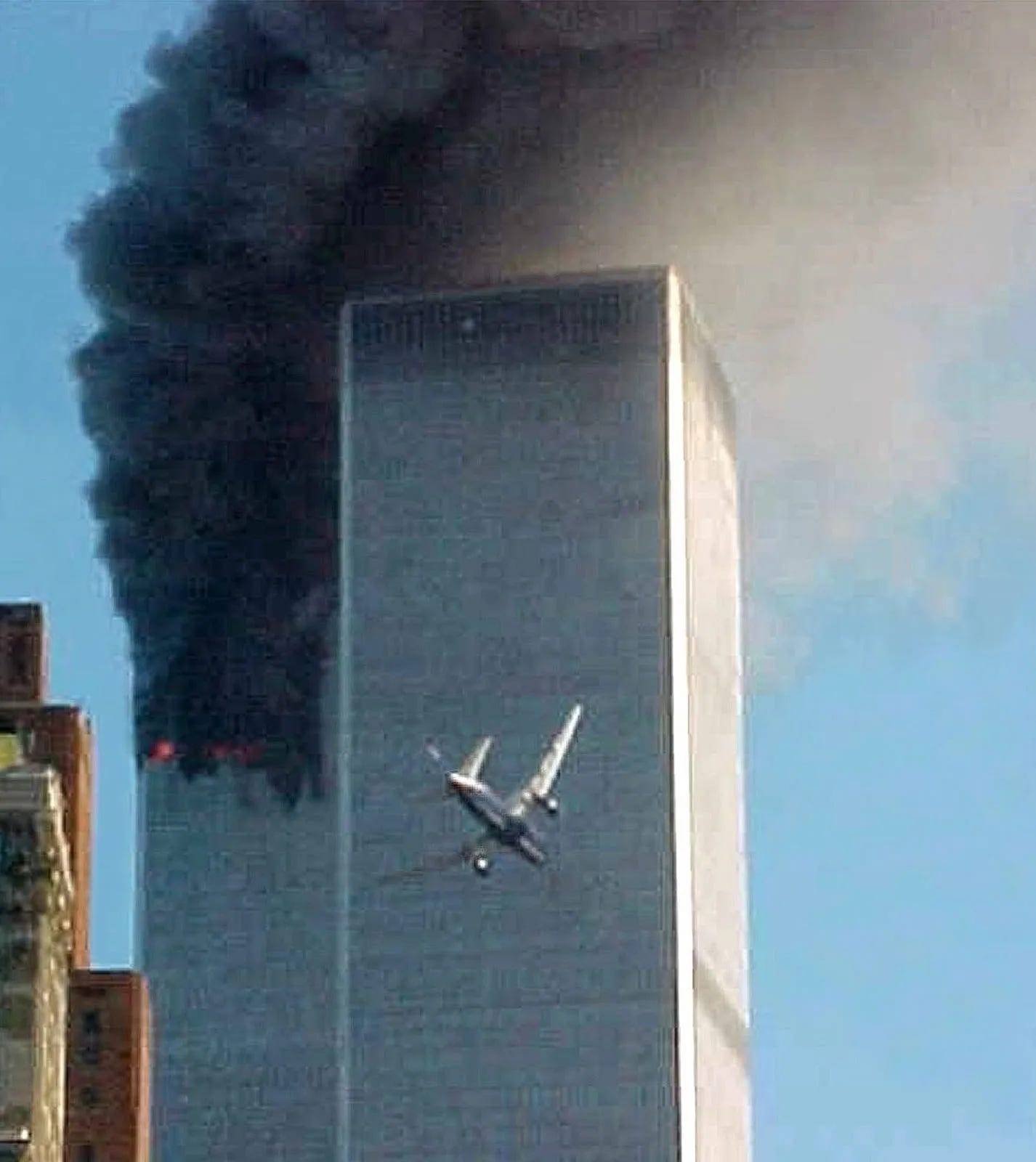
Then, together with my students, I watched the second plane hit the South Tower.
For a few seconds, we thought the television station was replaying the first impact.
Then we realized it was not a replay.
It was happening again.
Live.
Whatever uncertainty remained disappeared. We were watching an attack unfold.
Then one of my students walked toward me.
“Both of my parents work in that second tower.”
Twenty-five years later, I can still remember the feeling of hearing those words.
She was looking at me because I was the teacher. I was the adult in the room. Presumably, I was supposed to know what to do.
I didn’t.
There was no lesson plan for that moment. No teacher-preparation course had covered it. No handbook told you what to say to a teenager who had just watched an airplane fly into the building where both of her parents worked.
I was stunned.
After what felt like an eternity, I called the front office and explained what had happened. The vice principal told me to send her to the nurse.
So I did.
The rest of us remained in that classroom, watching history turn into tragedy in real time.
Soon came the images that remain burned into the memories of an entire generation: smoke, flames, people running through the streets, and first responders moving toward buildings everyone else was trying to escape.
Then the towers came down.
Somewhere in the middle of it all was a student from my first-period class who did not know whether her parents were alive.
Neither did we.
We would not learn until a couple of days later that both of her parents had escaped the tower only minutes before it collapsed.
They made it home.
Thousands of other families did not receive that news.
That distinction has stayed with me ever since.
It Was Not Somewhere Else
For those of us on Long Island, New York City was not a distant place we knew only from television.
People from our communities traveled there to work every day. Many police officers, firefighters, and other emergency workers lived on Long Island and served in the city. They were neighbors, friends, parents, and family members.
Nearly 500 Long Islanders were killed in the attacks. The losses reached far beyond Manhattan, into homes and communities across Nassau and Suffolk counties. Newsday
That connection mattered inside our schools. What students were seeing on television was happening to people whose lives overlapped with their own.
In my classroom, that connection had become immediate in a single sentence.
“Both of my parents work in that second tower.”
The days that followed are difficult to describe to anyone who did not experience the New York area at that moment.
Cell phone service was overwhelmed. Families struggled to reach one another. People waited for calls that sometimes came—and sometimes never did.
Combat air patrols flew above Long Island.
Having served in the Air Force, I understood what those aircraft represented. They were there to protect American airspace. But hearing and seeing them over home was also a constant reminder of how profoundly things had changed.
Even the sky felt different.
Schools eventually returned to their schedules. Bells rang. Classes met. Teachers taught.
But “normal” no longer meant quite what it had before.
What Has Stayed With Me
For me, one image from that day has endured more vividly than almost anything I saw on television.
It is not the airplane.
It is not the burning towers.
It is not even the collapse.
It is a student walking toward me and telling me that both of her parents worked in the building we had just watched being struck.
That is how I remember September 11: not simply as a historic event or an attack on the United States, but as a human moment in a classroom filled with young people who suddenly understood that what was happening was not somewhere else.
It was happening to people they knew.
To families they knew.
To one of their classmates.
Those students are now well into adulthood. Many undoubtedly have children of their own.
But in my memory, they are still sitting in that classroom on a Tuesday morning in September 2001.
And I am still a first-year teacher trying to find something—anything—to say when there were no words.
I had spoken at Jay’s memorial just four days earlier, trying to put love and loss into words. Now I stood in a classroom facing a frightened student, unable to offer the reassurance she needed most: that her parents were safe.
We did not know that yet.
Remembering that uncertainty is part of remembering the day. So is remembering the relief when we finally learned they had survived—and knowing how many families never experienced that relief.
As we approach this 25th anniversary, I remember the nearly 3,000 people who went to work, boarded airplanes, reported for duty, or began an ordinary Tuesday morning and never came home.
I remember the firefighters, police officers, emergency personnel, military members, and ordinary citizens who ran toward danger.
I remember the families who waited for news.
And I remember one frightened student looking to her teacher for reassurance at a moment when none of us could possibly know what would come next.
Her parents made it home.
Far too many did not.
Twenty-five years later, I still remember that classroom.
And I will never forget.
As someone in the know. United Airlines or American Airlines had nothing to do with those attacks. There are witnesses.
Something else to look at. Look at the face of Geroge W. Bush face when he was first told about the attacks in that classroom with those children reading a book. 📕 Now look at the face of BiBi when he was told about the attack on America 🇺🇸.
A face can tell a thousand words.