

By Dr. John Petrone
Eight.
That is the number we need to sit with.
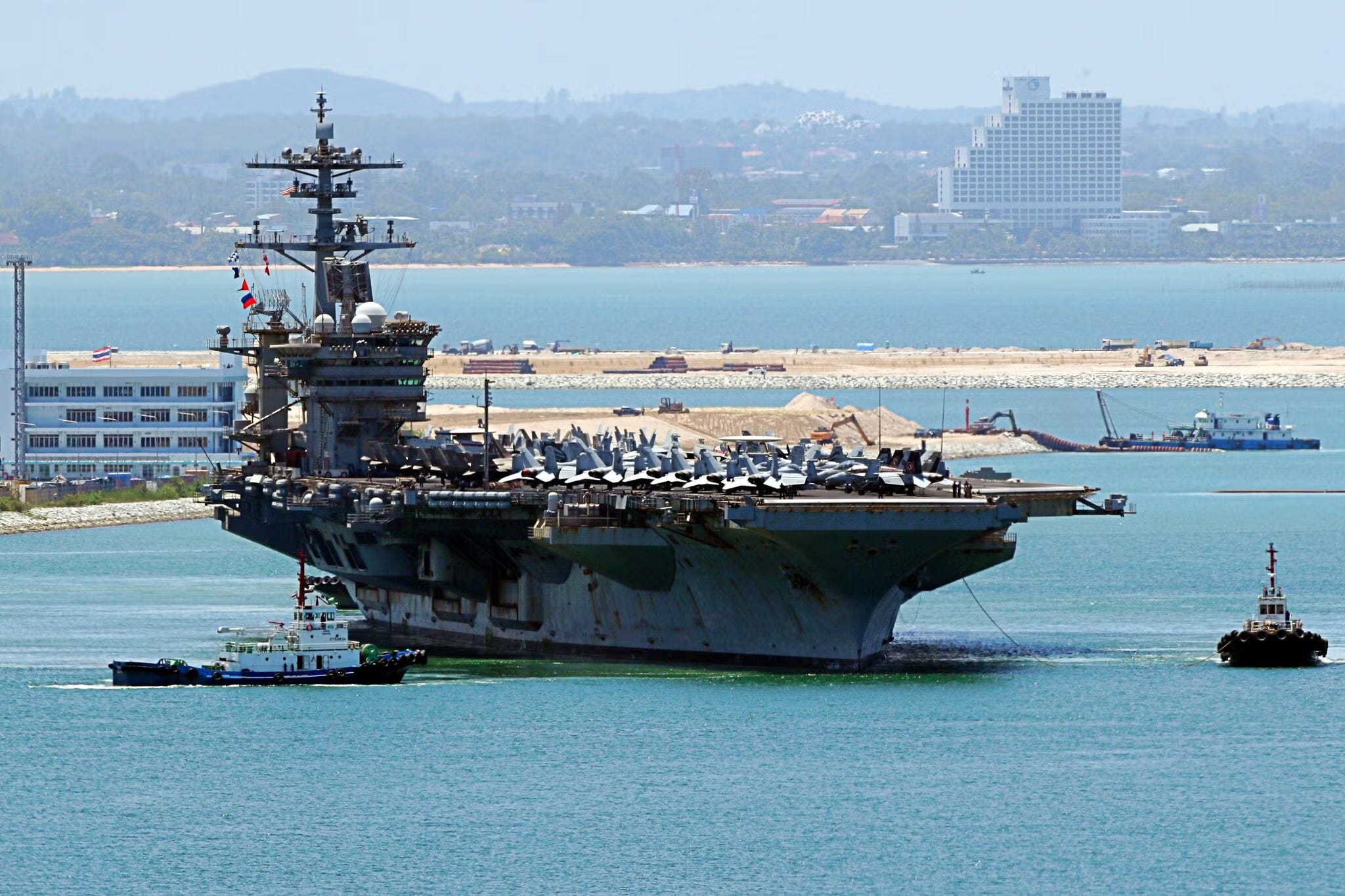
Eight service members assigned to the USS Abraham Lincoln carrier strike group attempted suicide during its extraordinary deployment, according to Acting Navy Secretary Hung Cao. None died. One sailor was rescued after going overboard in August, and shipmates stopped another sailor during an attempt in March. The eight cases span the carrier, its air wing, destroyers, and other personnel assigned to the strike group.
As a veteran, I do not hear that number and immediately think Republican or Democrat.
I think command responsibility.
I think about young men and women doing exactly what they volunteered to do: following orders, carrying out a mission, working exhausting schedules and accepting hardships most Americans will never experience.
Military service demands sacrifice.
But sacrifice cannot become an excuse for institutional blindness.
What Happened
The Lincoln left San Diego in November 2025 and eventually spent more than 260 consecutive days at sea, a modern record, while supporting combat operations against Iran. The deployment stretched well beyond its original timetable.
And this was not simply nine months aboard a floating city.
These sailors were operating in a combat environment.
The Navy itself acknowledged that fighting in the Middle East disrupted traditional supply routes. Food, hygiene products and mail had to be prioritized as replenishment became more difficult. Reports from families and military publications described plumbing failures, supply problems, deteriorating morale and growing mental-health concerns.
The Navy disputed some of the characterizations. It said meals continued to be served, clean water was available and mental-health resources were aboard the carrier. Acting Secretary Cao emphasized in August that the ship had completed thousands of sorties and more than 200 days in a combat zone while maintaining its mission.
That side of the story matters.
So does the other side.
President Donald Trump, when questioned in August about the deployment and concerns from families, said the carrier had not been deployed for “nearly long enough.” Defense Secretary Pete Hegseth said reporting about conditions aboard the ship had been “completely misrepresented.”
The Pentagon also maintained that suicide attempts had not increased and pointed to counselors, chaplains and other support available to sailors. Senator Kirsten Gillibrand, after receiving Cao’s subsequent disclosure of the eight attempts, argued that the information substantiated concerns she had been raising about conditions aboard the strike group.
And there is an important piece of context that should not be ignored simply because it complicates the story.
CNN reported that the rate represented by the eight attempts was roughly consistent with the active-duty Navy’s overall 2024 suicide-attempt rate. The Pentagon’s latest annual report also found that the active-component suicide death rate declined in 2024 compared with 2023, while cautioning that one year of improvement is not enough to establish a long-term change.
That means we should resist a conclusion the evidence does not yet establish:
We cannot say that the Lincoln deployment caused eight people to attempt suicide.
But neither should anyone use that uncertainty as an excuse to stop asking questions.
The Pattern
This is not the first time the Navy has been forced to confront the relationship between working conditions, command climate, mental-health resources and suicide.
In April 2022, three sailors assigned to the USS George Washington died by suicide within days of one another while the carrier was undergoing an extended overhaul.
The Navy later determined that the three sailors had different individual stressors and no meaningful social connection linking their deaths. That distinction matters.
But the Navy did not stop there.
A broader investigation examined command climate, living conditions, food, housing, mental-health support and the quality of sailors’ daily lives. The resulting review produced extensive recommendations and prompted Navy leaders to acknowledge that quality of service had to receive far greater attention.
The investigation also exposed a problem that should sound familiar today: mental-health resources that existed on paper could still become overwhelmed in practice.
At one point aboard the George Washington, sailors seeking an initial mental-health appointment faced waits of four to six weeks, according to the investigation.
Just last week, Navy Times reported that current and former Navy personnel say prolonged combat deployments are again straining a shipboard mental-health system that was not designed for sustained demand at that level.
Different ship.
Different circumstances.
Same institutional question:
When extraordinary demands are placed on sailors, are extraordinary support systems put in place with them?
Why It Matters
As a veteran, there is something about the language surrounding these stories that bothers me.
We too often force service members into one of two caricatures.
Either they are helpless victims.
Or they are indestructible warriors who can absorb anything because hardship is part of the job.
Neither is true.
The people serving aboard American warships are trained professionals. They understand sacrifice. They understand long hours, disrupted plans, missed holidays, danger and separation from family.
But professionalism does not repeal human biology.
Sleep matters.
Nutrition matters.
Communication with family matters.
Predictability matters.
Morale matters.
Mental health matters.
And leadership matters.
Acting Secretary Cao said in August that sailors aboard the Lincoln had been “pushed to their limits” while emphasizing that they had continued accomplishing the mission.
Those two realities can exist simultaneously.
A crew can perform magnificently and still be under tremendous strain.
That is precisely why leaders cannot measure troop welfare solely by whether aircraft are still launching, watches are still being stood and the mission is still getting accomplished.
Sometimes the most disciplined people in the world will keep doing their jobs long after the warning lights have started flashing.
How We Fight Back
This should not become another Washington shouting match in which politicians select the facts that best fit the story they already wanted to tell.
The sailors deserve better than that.
There are concrete questions Congress, the Navy and the Defense Department can answer without turning this into a partisan morality play:
What were the circumstances and timing surrounding the eight attempts, and did any patterns emerge as the deployment lengthened?
What were actual wait times for mental-health services aboard the strike group?
Were staffing levels adjusted when a normal deployment became an extraordinarily long combat deployment?
What objective measures does the Navy use to determine when fatigue, morale and psychological strain require additional personnel, resources or operational changes?
What lessons from the George Washington investigations were implemented, and which remain unresolved?
When the Navy previously said it had not observed an increase in suicidal behavior aboard the Lincoln, what data supported that assessment?
Those are not anti-military questions.
They are exactly the questions a serious military organization should want answered.
Because after-action reviews are not admissions of weakness.
They are how professional organizations improve.
The Line We Draw
No president, secretary, senator, admiral or commentator should be judged in this story by who produces the best sound bite.
The standard should be simpler.
What did leadership know?
When did they know it?
What did they do about it?
And what will change because of what happened?
I do not need these sailors described as victims.
I also do not need them described as superhuman.
I need them treated for what they are: Americans who raised their hands, swore an oath and agreed to go where their country sent them.
That obligation runs both ways.
When a nation asks extraordinary things of its military, its responsibility to those serving does not diminish because the mission is difficult.
It grows.
Mission accomplishment and troop welfare are not competing values.
A military that forgets that eventually damages both.
The eight suicide attempts aboard the Abraham Lincoln strike group do not prove one simple cause, and they should not be reduced to one convenient political narrative.
But they are a warning signal.
And warnings exist for one reason:
So we pay attention before the next one ends differently.
If you found this reporting useful, please restack and share it so the sailors and the larger issue do not disappear with the next news cycle.
If you are a service member, veteran, or family member in crisis, the Military/Veterans Crisis Line is available 24/7: dial 988 and press 1, or text 838255.
Alert me to major USS Lincoln follow-up