The Attack on South Pars Was Also an Attack on Qatar
A reckless strike on a shared gas field has put the Gulf, the global energy system, and millions of ordinary people in the blast radius
By John Petrone
This was not a limited strike. It was an act of extraordinary recklessness.
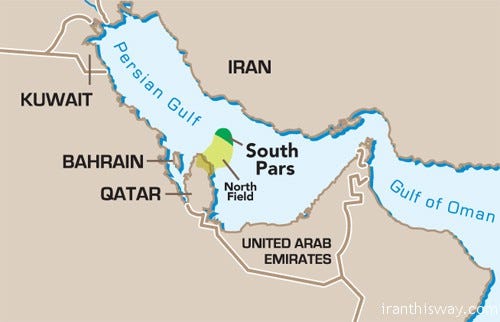
When Israel hit Iran’s South Pars gas field, it did not strike some isolated Iranian facility disconnected from the wider region. It struck one half of the largest natural gas field on Earth, a shared reservoir that extends beneath the Gulf into Qatar, where it is known as the North Field.
That single fact should have set off alarms everywhere.
Because this was never just about Iran.
It was always about Qatar too.
And now the danger is no longer hypothetical. Iran has already retaliated this afternoon by striking other Gulf states. Qatar has already been hit. Saudi Arabia has already come under missile fire. The spread everyone should have feared has already begun.
The Field They Hit
South Pars is not some secondary asset. It is the backbone of Iran’s domestic energy system. Iran depends on it for electricity, for heating homes, for keeping major parts of its economy alive.
But here is the part that makes this strike even more dangerous.
South Pars is only one side of the same giant field. On the Qatari side, that same resource is the North Field, the foundation of Qatar’s LNG power and much of its national wealth. Qatar built its energy empire on that shared reservoir. It used that field to become one of the most important gas suppliers in the world.
So when South Pars was attacked, the danger did not stop at Iran’s border. It immediately put Qatar’s economic lifeline at risk too.
That is what too many people still do not understand.
They hit a shared field.
They hit a reservoir that underpins Iran’s domestic survival and Qatar’s export economy.
They hit a critical energy nerve center in the Gulf.
That is not a neat military move. That is a gamble with a shared system that helps power a large part of the modern world.
Qatar Was Always in the Blast Radius
This is where the insanity of the decision becomes impossible to ignore.
Qatar’s side of that field is not peripheral. It is central to the country’s wealth, security, and strategic relevance. The gas from the North Field feeds the facilities that allow Qatar to export LNG around the world. Those exports matter enormously to global markets.
That means a strike on South Pars was never going to be read as a local event.
It sent a message to the entire Gulf that this shared energy ecosystem was now inside the war.
It told Qatar that the field beneath its own prosperity had effectively been pulled into open conflict.
It told markets that one of the most important gas systems on Earth was now exposed.
It told every neighboring state that Gulf energy infrastructure could become the next target.
And that is exactly what happened.
The Retaliation Already Came
This is the part that makes the whole thing even more damning.
Iran has already retaliated this afternoon by striking other Gulf states. Qatar has already taken a hit. Saudi Arabia has already faced missile fire.
So nobody can pretend any longer that the fear of spillover was exaggerated.
Nobody can pretend Qatar was merely a bystander.
Nobody can pretend this was somehow contained.
The retaliation came fast because the logic was always obvious. If you strike one side of a shared energy field in the Gulf, you are not just hurting your enemy. You are threatening a regional energy ecosystem. You are inviting a response that spreads outward into neighboring states, export hubs, industrial zones, and the infrastructure that keeps the global economy moving.
This was predictable.
Anyone with a map and a functioning brain should have known it.
Why This Hurts Qatar Too
Qatar now faces a danger it did not choose.
Its wealth, its export infrastructure, and its standing as one of the world’s most important LNG suppliers all depend on a field that is geologically tied to the very zone that was attacked. Even if the original strike landed on the Iranian side, the consequences radiate straight toward Qatar.
That means risk to facilities.
Risk to investor confidence.
Risk to export stability.
Risk to shipping.
Risk to the broader confidence that buyers and markets place in Qatar’s ability to deliver energy safely and consistently.
And because Qatar matters so much to global gas supply, the pain does not stay there.
It spreads.
It spreads to Europe.
It spreads to Asia.
It spreads into shipping costs, insurance costs, utility bills, airline fuel costs, and inflation pressure.
That is why this was never just a story about Iran getting hit.
It was always a story about Qatar being endangered too.
This Is How a War Becomes an Economic Shock
Energy warfare is never contained to the battlefield.
It hits homes.
It hits power systems.
It hits cargo routes.
It hits food prices.
It hits airline routes.
It hits household budgets.
It hits the cost of ordinary life.
Once facilities are attacked and retaliation spreads across Gulf states, the region stops being merely a war zone and becomes an economic shock zone. Every new strike raises the odds of more shutdowns, more disruption, more fear in the markets, and more punishment for ordinary people who had no say in any of it.
That is what the war addicts never tell you.
They speak in slogans about strength and deterrence. They do not talk about the people who get crushed when critical energy systems start burning.
The Pattern
This is the pattern of reckless leadership.
Attack first.
Ignore what is connected beneath the surface.
Pretend the consequences will stay local.
Dismiss the warnings.
Mock diplomacy.
Then, when retaliation spreads exactly as feared, act as though no one could have seen it coming.
But this was not hard to see.
South Pars and Qatar’s North Field are not separate stories. They are two sides of the same field. Two sides of the same vulnerability. Two sides of the same danger.
Once one side is attacked, the other side is living under the shadow of escalation.
That is why this was so reckless.
That is why Qatar belongs at the center of this story.
That is why the retaliation this afternoon matters so much.
It proved, almost immediately, that this was never going to stay contained.
How We Fight Back
We fight back by telling the truth about what happened.
This was not just an attack on Iran.
It was an attack on a shared energy field.
It was an attack that put Qatar directly in danger.
It was an attack that helped trigger retaliation against other Gulf states within hours.
It was an attack on one of the most sensitive arteries of the world economy.
We fight back by refusing the lie that this is strength.
We fight back by demanding accountability from every leader, pundit, and coward who treats energy warfare like a clever move instead of the civilian and economic catastrophe it can become.
We fight back by making people understand that foreign policy recklessness always comes home. It comes home through higher prices, instability, fear, and the collapse of any serious democratic oversight.
We fight back by growing a larger community of citizens who are not passive, not gullible, and not willing to let dangerous men gamble with the world while calling it strategy.
If you are new here, subscribe.
Subscribe because too much of the media still sanitizes recklessness and calls it policy.
Subscribe because the public needs voices willing to say plainly what others are too timid to say.
Subscribe because the stakes are too high for spectators.
South Pars was never just Iran’s story.
It was always Qatar’s story too.
And by this afternoon, the retaliation had already proven the point.
See it clearly.
Name it honestly.
Bring others with you.


This was Netanyahu’s and Putin’s plan all along.