The Firing of Scott Pelley Is a Warning Shot at the Free Press
When truth tellers are punished and billionaires bend the newsroom, democracy is already under attack.
By Dr. John P. Petrone
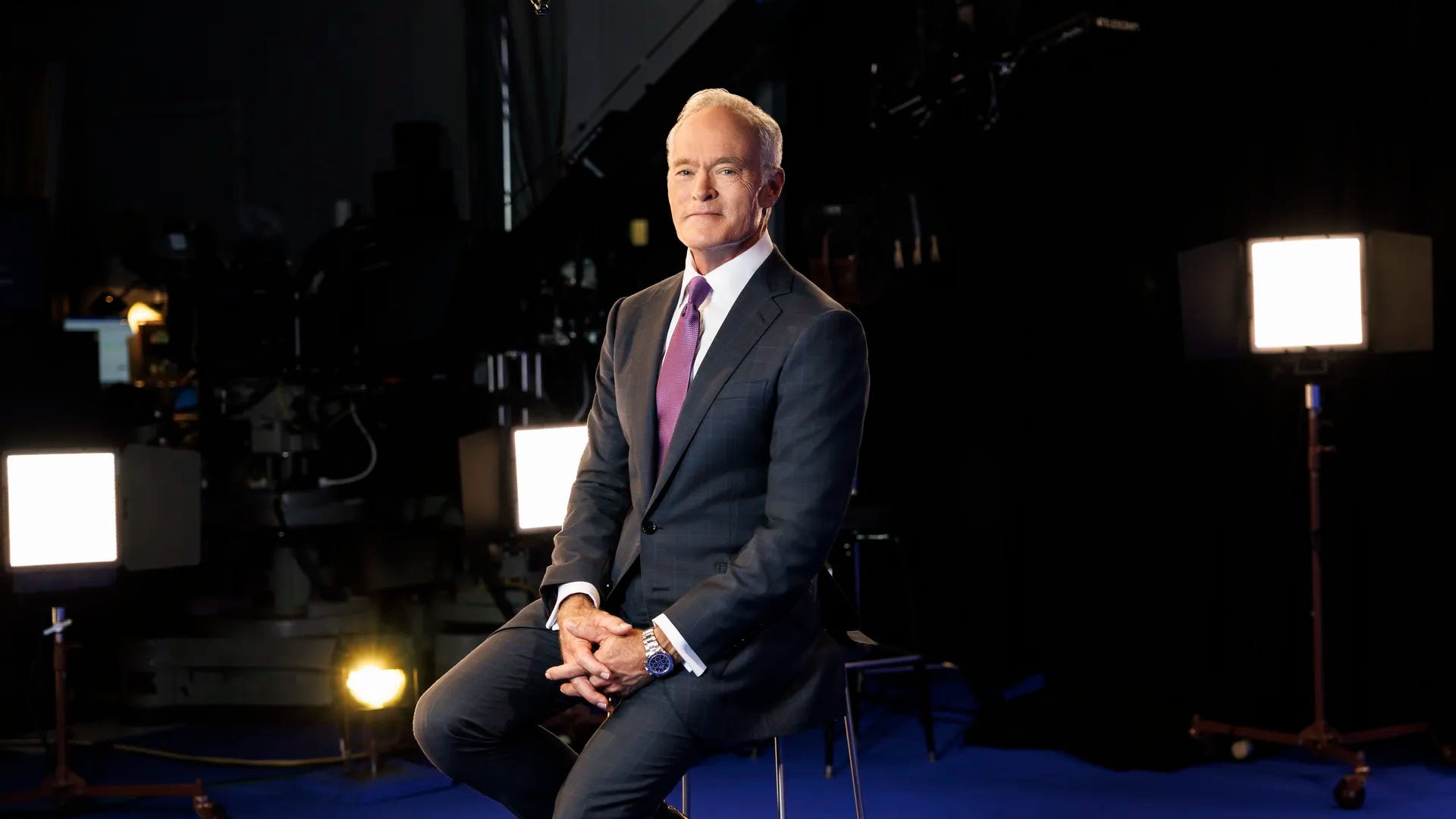
Scott Pelley was not just fired from 60 Minutes.
He was made an example.
That is the point.
When one of the most respected journalists in American broadcast history is pushed out after standing up inside a newsroom, Americans should not treat it as another media industry shakeup. They should treat it as a warning flare. A red light. A siren. A message sent from the corporate boardroom to every reporter still willing to ask hard questions.
Know your place.
Do not anger power.
Do not challenge the new owners.
Do not embarrass the people we are trying to please.
That is the disease now spreading through American institutions. It is not always loud. It does not always arrive wearing a brown shirt or carrying a torch. Sometimes it comes in the language of restructuring. Sometimes it comes in memos about the future. Sometimes it comes dressed up as balance, modernization, brand realignment, or trust and mutual respect.
But underneath the polished corporate language, the message is brutally simple.
Tell the truth, and you may be next.
The Pattern Is the Story
This did not happen in a vacuum.
This happened after Paramount settled with Donald Trump over the 60 Minutes interview with Kamala Harris. This happened after concerns were raised inside the program about political pressure. This happened after experienced journalists and producers were pushed out. This happened after new leadership arrived with a mandate to remake one of the most important news programs in American history.
And now Scott Pelley is gone.
That is the pattern.
First, the corporate parent bends.
Then the newsroom is pressured.
Then the old guard is removed.
Then the language changes.
Then the mission changes.
Then the public is told nothing to see here.
We have seen this before. Not always in the same form. Not always with the same faces. But the logic is familiar. Authoritarian politics does not need to seize every press room overnight. It only needs enough executives to become afraid. It only needs enough owners to decide that access matters more than truth. It only needs enough journalists to look over their shoulders before asking the next question.
That is how free institutions rot.
Not all at once.
One firing at a time.
What Pelley Represented
Scott Pelley represented something that is becoming dangerous in modern America.
He represented memory.
He represented standards.
He represented the old idea that journalism is not supposed to flatter the powerful. It is supposed to investigate them. It is supposed to irritate them. It is supposed to make them answer questions they do not want asked.
That used to be the job.
Now, in too many corners of corporate America, the job is becoming something else. Manage the optics. Protect the merger. Avoid regulatory trouble. Keep the strongman calm. Do not provoke the political machine. Do not challenge the people who can punish the company.
That is not journalism.
That is obedience with a camera crew.
And once news organizations begin making decisions based on who might retaliate, the free press is no longer free in any meaningful sense. It becomes a managed product. It becomes a brand. It becomes content. It becomes another corporate asset to be adjusted, softened, and sanitized until it no longer threatens anyone who deserves to be threatened.
That is why this matters.
This is not about whether every viewer liked Scott Pelley. This is not about whether every story on 60 Minutes was perfect. This is not even only about CBS.
This is about whether major American news institutions still have the spine to tell the truth when the truth is inconvenient to power.
Right now, the answer is looking worse by the day.
The Billionaire Problem
America has a billionaire problem.
Not because wealth itself is a crime, but because concentrated wealth married to political influence becomes a direct threat to democracy.
When billionaires own the platforms, the networks, the newspapers, the data, the algorithms, the distribution systems, and the politicians, the public square becomes a private estate. The people may still speak, but the gatekeepers decide whose voice is amplified, whose story disappears, and whose career ends.
That is not a free marketplace of ideas.
That is feudalism with better lighting.
And when those billionaires are trying to curry favor with an administration that has repeatedly attacked the press, demonized journalists, threatened opponents, and treated truth as an enemy combatant, every newsroom decision must be viewed through that lens.
Not cynically.
Realistically.
Because democracy does not die only when soldiers surround the television station. Sometimes it dies when executives decide, quietly and efficiently, that the truth is bad for business.
That is what makes the Pelley firing so disturbing.
It looks like a message.
A message to reporters.
A message to producers.
A message to editors.
A message to anyone still willing to say no.
The message is this: the institution has new masters now.
The Cowardice Is the Point
The powerful always prefer cowardice in polite packaging.
They do not say they are afraid of Trump.
They say they are pursuing balance.
They do not say they are weakening the newsroom.
They say they are modernizing it.
They do not say they are punishing dissent.
They say trust was broken.
They do not say they are surrendering editorial independence.
They say they are moving in a new direction.
We should stop pretending not to understand the language.
This is how institutions protect themselves while abandoning their purpose. This is how corporate leaders wash their hands while others pay the price. This is how moral collapse becomes a management decision.
And it is always framed as professionalism.
But professionalism without courage is just compliance.
Respect without truth is just silence.
Balance without facts is just propaganda wearing a better suit.
The Press Is Not Supposed to Be Comfortable
A free press is not supposed to make presidents comfortable.
It is not supposed to make billionaires comfortable.
It is not supposed to make shareholders comfortable.
It is not supposed to make political parties comfortable.
It is supposed to make the public informed.
That is the mission.
Everything else is noise.
When powerful people complain about journalism, the answer is not to weaken journalism. The answer is to do better journalism. More rigorous. More precise. More relentless. More independent. More fearless.
But that requires leadership with courage.
It requires executives who understand that a newsroom is not a public relations department. It requires owners who understand that news is not just another asset class. It requires editors who understand that independence is not a branding slogan. It is a daily fight.
And it requires journalists willing to risk something.
Scott Pelley risked something.
Now he is gone.
That should tell us exactly what kind of moment we are in.
This Is Bigger Than CBS
Do not let anyone shrink this story.
Do not let them turn it into a personality clash.
Do not let them bury it under office politics.
Do not let them reduce it to whether Pelley was too blunt in a meeting.
That is not the point.
The point is that one of the most important journalistic programs in the country is being shaken to its foundation at the same time political power is pressuring media institutions across the country.
The point is that Trump and his movement have spent years attacking the press as the enemy of the people.
The point is that too many corporate leaders have decided the safest path is not resistance, but accommodation.
The point is that when authoritarian politics meets cowardly ownership, truth becomes expendable.
That is the point.
And Americans had better understand it before the next firing, the next resignation, the next spiked story, the next softened investigation, the next interview shaped to please power, and the next newsroom quietly gutted in the name of progress.
How We Fight Back
We fight back by refusing to normalize this.
We fight back by supporting independent journalism.
We fight back by calling out corporate cowardice wherever it appears.
We fight back by subscribing to outlets that still tell the truth.
We fight back by sharing reporting that powerful people want buried.
We fight back by understanding that democracy requires more than elections. It requires institutions that can withstand pressure. Courts. Schools. universities. unions. veterans groups. civic organizations. newsrooms.
And yes, citizens.
Especially citizens.
Because when the press is weakened, the public is blinded.
And when the public is blinded, authoritarianism moves faster.
That is why this moment matters.
The firing of Scott Pelley is not just a media story. It is a democracy story. It is a power story. It is a warning about what happens when billionaires, political pressure, and institutional cowardice converge.
The old line was that democracy dies in darkness.
That is still true.
But darkness does not always fall at once.
Sometimes the lights are turned off one by one.
Tonight, one of those lights went out at 60 Minutes.
And every American who still cares about truth should be angry.
Not confused.
Not distracted.
Angry.
Because the people trying to control the story are not just attacking journalists.
They are attacking our right to know.
Subscribe. Share this. Speak up. Support independent media. Defend the truth before the people trying to bury it finish the job.