
THE NAVY IS NOT TRUMP’S DESIGN STUDIO
Warships should be built to win wars—not satisfy one president’s personal taste.
By Dr. John Petrone
As a United States Air Force veteran, I learned something very basic about military service: the mission comes first.
The aircraft, ships, vehicles, weapons, and equipment entrusted to our service members exist for one purpose—to accomplish that mission as effectively and safely as possible.
They are not fashion accessories.
They are not presidential vanity projects.
And they certainly should not be redesigned because the commander in chief thinks they would look better another way.
Yet that is apparently where the United States Navy now finds itself.
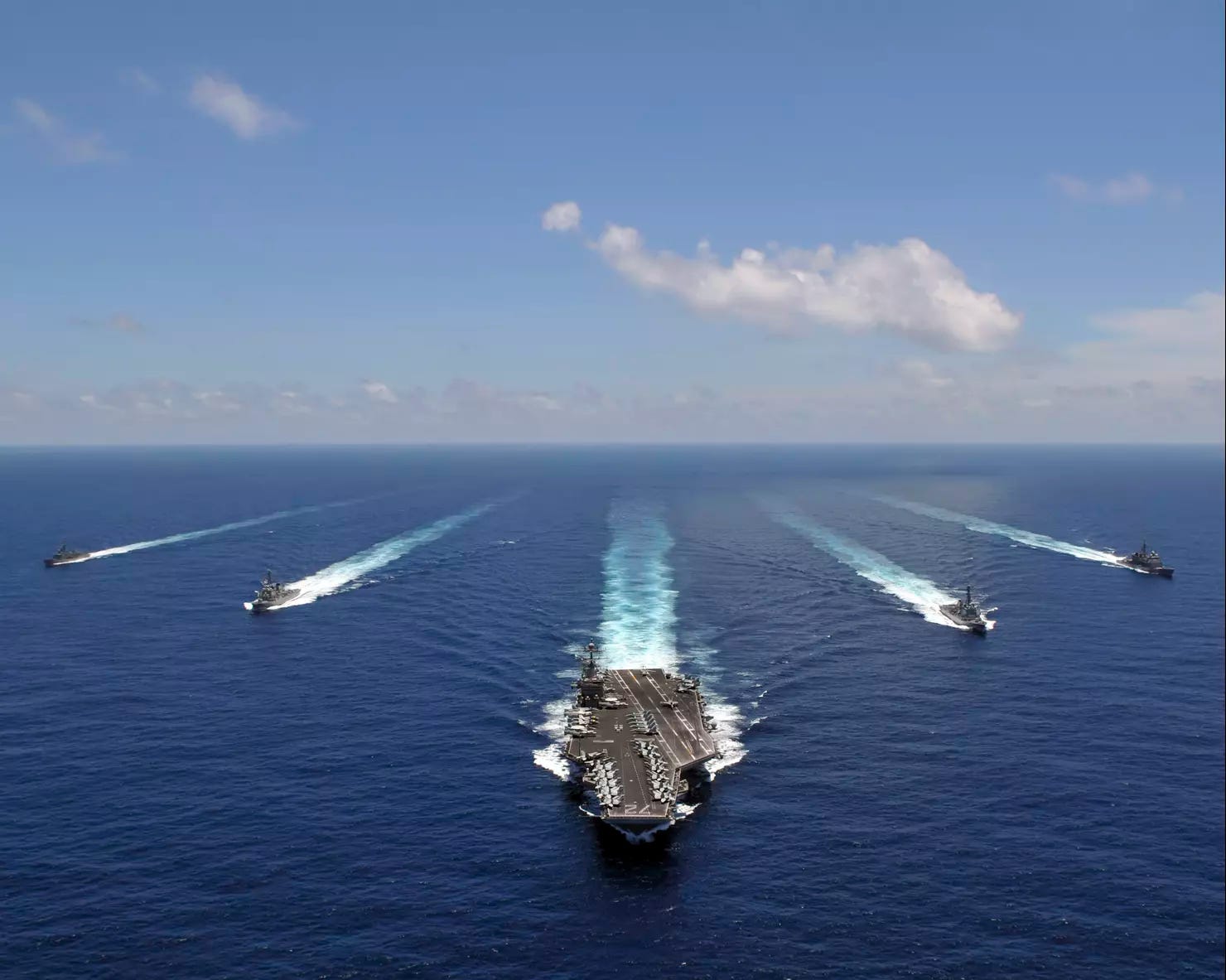
According to multiple reports, the Navy is studying whether to significantly redesign future Ford-class aircraft carriers by moving their massive command towers—the structures known as islands—farther forward on the flight deck.
The reason is extraordinary.
Donald Trump does not like how the ships look.
He prefers the appearance of older aircraft carriers.
He has repeatedly described himself as an “aesthetic person,” complained publicly about the Navy’s modern ship designs, and claimed that he has personally helped redesign military vessels.
Now those preferences appear to be finding their way into actual Pentagon planning.
This is not merely ridiculous.
It is potentially expensive.
It is potentially disruptive.
And from the perspective of someone who wore the uniform—and comes from a family in which military service spans generations—it is profoundly troubling.
Because military equipment should never be designed around the personal tastes of the politician temporarily occupying the White House.
The Pattern
Trump’s fixation on the appearance of Navy ships did not begin this week.
For months, he has publicly complained about modern American warships.
He has said he wants “gorgeous” ships.
He has boasted that he personally influenced hull designs.
He has repeatedly described himself as unusually qualified to judge their appearance because, in his words, he is an “aesthetic person.”
That might be dismissed as another peculiar Trump tangent if it ended there.
It has not.
Trump has also directed the Pentagon to develop plans to abandon electromagnetic aircraft-launch technology on future Ford-class carriers and return to traditional steam catapults.
He wants electromagnetic weapons elevators replaced with older hydraulic systems as well.
Trump has complained about electromagnetic catapults for years.
His reasoning has frequently rested on personal impressions, anecdotes, and his belief that older technology simply works better.
There is legitimate debate surrounding the Ford-class program.
The ships have experienced cost overruns.
New technologies encountered serious developmental problems.
EMALS suffered reliability challenges.
Weapons elevators became notorious for delays.
Those problems deserve scrutiny.
They deserve congressional oversight.
They deserve rigorous testing.
They deserve engineers asking difficult questions.
But there is an enormous difference between questioning a technology because operational evidence demonstrates that it is inadequate and rejecting it because the president prefers something older.
There is an equally enormous difference between modifying a carrier because naval engineers identify an operational problem and moving its command structure because Donald Trump likes the silhouette of older ships better.
That distinction matters.
Why This Matters
Aircraft carriers are among the most complicated machines human beings have ever constructed.
A modern nuclear-powered carrier is essentially a floating city combined with an airport, weapons platform, power plant, command center, repair facility, and logistics hub.
Thousands of sailors live and work aboard it.
Aircraft launch and recover continuously.
Fuel moves through it.
Weapons move through it.
Electrical systems, communications systems, aviation systems, radar systems, propulsion systems, and damage-control systems must function together under conditions that would overwhelm almost any civilian organization.
Nothing about these ships is accidental.
Where equipment is positioned matters.
Where aircraft are parked matters.
Where elevators are located matters.
Where the island sits matters.
The Ford-class island was moved farther aft for operational reasons.
Its placement provides additional usable flight-deck space and assists the complex choreography required to move, launch, recover, refuel, rearm, and reposition aircraft.
Its location also affects airflow and flight operations.
Moving a structure that large is not equivalent to rearranging furniture in a hotel lobby.
It could affect weight distribution.
It could affect wiring.
It could affect piping.
It could affect radar and communications systems.
It could affect flight-deck operations.
It could require redesigning enormous portions of a ship whose components are already interconnected in extraordinarily complicated ways.
And according to officials familiar with earlier examinations of such changes, redesigning these ships could potentially cost billions of dollars and cause substantial construction delays.
Billions.
Think about what that means.
Not billions to provide sailors with better housing.
Not billions to improve shipyard capacity.
Not billions to expand missile defenses.
Not billions to accelerate maintenance.
Not billions to improve unmanned systems.
Not billions to strengthen American naval power in the Pacific.
Potentially billions because the president does not like where the tower sits.
As a veteran, I cannot view that casually.
Every dollar diverted toward unnecessary redesign is a dollar that cannot be spent somewhere else.
Every delay affects readiness.
Every procurement decision eventually reaches the men and women who must operate the equipment.
Those decisions are not abstractions to the people wearing the uniform.
They live with them.
A Military Already Under Enormous Pressure
This story becomes even more disturbing when placed alongside the realities confronting the Navy today.
America’s shipbuilding capacity has struggled.
Maintenance delays have plagued the fleet.
Major programs routinely arrive late and over budget.
Shipyards remain under enormous strain.
And sailors are being asked to sustain extraordinary operational tempos around the world.
American carriers routinely deploy for months at a time.
Their crews work brutal schedules.
Their families endure long separations.
Maintenance requirements accumulate.
The Navy is simultaneously expected to maintain a global presence, deter China in the Pacific, respond to crises in the Middle East, protect shipping lanes, reassure allies, and prepare for conflicts that could demand capabilities unlike anything America has faced in decades.
That is where presidential attention should be concentrated.
Readiness.
Shipbuilding.
Maintenance.
Recruitment.
Retention.
Weapons inventories.
Drone warfare.
Cybersecurity.
Missile defense.
The welfare of sailors.
Instead, senior Navy officials are reportedly spending time examining whether the island on an aircraft carrier should be moved because the president thinks older carriers looked better.
That is an astonishing misalignment of priorities.
Expertise Is Not Elitism
There is a dangerous habit developing in American politics in which expertise itself is treated with suspicion.
Engineers become bureaucrats.
Scientists become elitists.
Career military officers become members of some supposed establishment.
Civil servants become obstacles.
Knowledge accumulated over decades becomes less important than the intuition of the political leader at the top.
I reject that completely.
I served in the Air Force as an aircraft maintenance specialist.
One lesson becomes obvious very quickly when you work around military aircraft:
You respect expertise because people’s lives depend upon it.
You do not improvise maintenance procedures because something looks better.
You do not ignore technical orders because somebody has a feeling.
You do not substitute personality for engineering.
Aircraft do not care who won an election.
Machinery does not respond to political loyalty.
Physics does not bend because a president believes he understands something better than the engineers who designed it.
Aviation taught me that.
Military service taught me that.
There are people in uniform and people working throughout the defense establishment who have devoted their entire professional lives to understanding naval architecture, carrier aviation, propulsion, weapons systems, aerodynamics, logistics, and shipbuilding.
A president should challenge them.
A president should demand accountability.
A president should question assumptions.
But a competent president should also understand something essential:
Sometimes the people in the room know more than you do.
That is not weakness.
That is leadership.
The Constitutional Stakes
The president of the United States is commander in chief.
Civilian control of the military is one of the foundations of our constitutional system.
As a veteran, I believe deeply in that principle.
Military officers do not decide national policy.
Elected civilian leaders do.
But civilian control does not mean civilian omniscience.
The Constitution grants the president authority over the military.
It does not grant the president expertise in naval engineering.
Those are very different things.
Presidents are supposed to rely on institutions containing people whose knowledge exceeds their own.
That is why presidents have military advisers.
That is why the Joint Chiefs exist.
That is why naval architects exist.
That is why engineers exist.
That is why testing programs exist.
That is why Congress conducts oversight.
No president—not Donald Trump, not a Democratic president, not any future president—should be surrounded by officials so afraid of contradicting him that personal preferences begin masquerading as military requirements.
A functional national-security system requires people capable of walking into the Oval Office and saying:
Mr. President, that will cost too much.
Mr. President, that will delay the ship.
Mr. President, the engineering does not support it.
Mr. President, operational testing says otherwise.
Mr. President, the Navy has already examined this.
Mr. President, appearances are not the mission.
That is not disrespect.
That is duty.
And if there is nobody left willing to have that conversation, we have a much larger problem than aircraft-carrier design.
The Cult of Personal Expertise
Trump has repeatedly presented himself as an extraordinary authority on subjects far outside his professional background.
Construction.
Trade.
Agriculture.
Healthcare.
Weapons.
Military technology.
Engineering.
Even grass.
The remarks often sound comical.
But presidential power makes them considerably less funny.
A private citizen can believe he knows everything without affecting national policy.
A president can order entire departments to act upon those beliefs.
That is the danger.
The issue is not simply arrogance.
It is what happens when enormous institutions begin reorganizing themselves around one individual’s instincts.
When officials learn that the safest career choice is agreeing with the president.
When expertise becomes subordinate to loyalty.
When professionals spend their time figuring out how to implement a leader’s preferences rather than explaining why those preferences may be mistaken.
That is how institutions weaken.
And strong democratic institutions are supposed to survive presidents precisely because they are governed by laws, processes, expertise, and professional standards larger than any individual.
The United States Navy belongs to the American people.
It does not belong to Donald Trump.
How We Fight Back
Congress should demand answers.
Detailed answers.
If the Navy is seriously considering redesigning future aircraft carriers, members of Congress should ask some basic questions.
What operational problem does moving the island solve?
What military requirement requires the change?
What engineering analysis supports it?
How much will it cost?
How much construction time will it add?
What systems must be redesigned?
What effect will it have on flight-deck operations?
What does the Navy itself recommend?
What do carrier aviators think?
What do naval architects think?
And perhaps most importantly:
Would this redesign even be under consideration if Donald Trump had never complained about how the ships look?
Congress should ask equally tough questions about returning to steam catapults.
If steam technology genuinely offers superior reliability and lifecycle costs, demonstrate it.
If EMALS has failed operational testing, produce the evidence.
If electromagnetic systems cannot meet wartime requirements, say so.
But if billions of taxpayer dollars are going to be spent reversing programs already well into production because Donald Trump prefers older technology, Americans deserve to know that too.
This should not be a Republican issue.
It should not be a Democratic issue.
It should be an American issue.
Congress has a constitutional responsibility to authorize military programs, appropriate taxpayer dollars, and conduct oversight.
Use it.
The Bottom Line
America does not build aircraft carriers to impress presidents.
We build them to deter enemies.
We build them to project American power.
We build them so American pilots can launch and recover aircraft safely.
We build them so sailors can fight, survive, and come home.
And the people serving aboard those ships deserve something from the government they have sworn to defend:
Competence.
As a United States Air Force veteran, that is what troubles me most about this story.
I know what it means to trust military equipment.
I know what it means to work around machinery where mistakes carry consequences.
And I know that the men and women operating America’s weapons systems deserve equipment designed according to mission requirements—not political vanity.
My family has worn America’s uniforms across generations.
Like countless military families, we understand that the person sitting in the Oval Office will change.
The mission continues.
The institution continues.
The country continues.
That is exactly why no president should be permitted to turn America’s military into an extension of his personality.
Civilian control requires respect for elected authority.
But good leadership requires something from the elected leader too:
Humility.
The humility to recognize expertise.
The humility to listen.
The humility to admit that someone else may know more.
The humility to understand that an aircraft carrier is not a skyscraper, a golf resort, or a television set.
It is a weapon of war.
And if we ever reach the point where America’s generals, admirals, engineers, and military professionals are too intimidated to tell a president that his personal preferences are militarily unsound, then the danger extends far beyond where the Navy places the tower on an aircraft carrier.
Because the real story here is not about ugly ships.
It is about whether the institutions responsible for defending the United States still possess the independence and professional courage to tell the commander in chief something every president occasionally needs to hear:
No, sir.
That is not what the evidence says.
That is not what the mission requires.
And that is not how we should spend the American people’s money or risk the lives of the Americans who serve.
That is the standard our service members deserve.
That is the accountability taxpayers deserve.
And that is the military a democracy requires.
If you believe America’s armed forces should be governed by readiness, expertise, professionalism, and the national interest—not the personal whims of any president—share this post. Restack it. Send it to a veteran, a military family, and someone who believes the people wearing the uniform deserve better than politics by personal preference.
We the People must insist that America’s military remain exactly what it was always intended to be: the nation’s military—not one man’s.
P.S. Presidents come and go. The men and women aboard these ships remain at sea long after the speeches are over. They live with the procurement decisions made in Washington. They operate the equipment. They absorb the consequences when leaders get those decisions wrong. We owe them something better than presidential aesthetics.
We owe them our very best.


Yes, "we have a much larger problem than aircraft-carrier design."
We have an entire political party that has abdicated all of its responsibilities.
To give them maximum grace, they started 10 years ago thinking they could "manage" him. Now they wait for someone else to act.
Trump has disparaged the military before. I won't go so far as to hope every uniformed person gets the message that they are completely disposable to the Republican party. But surely one of these service-related cluster f@cks will depress the Red team vote going forward?