THEY PRAISE THEIR “GRIT” WHILE LEAVING THEM TO ROT AT SEA
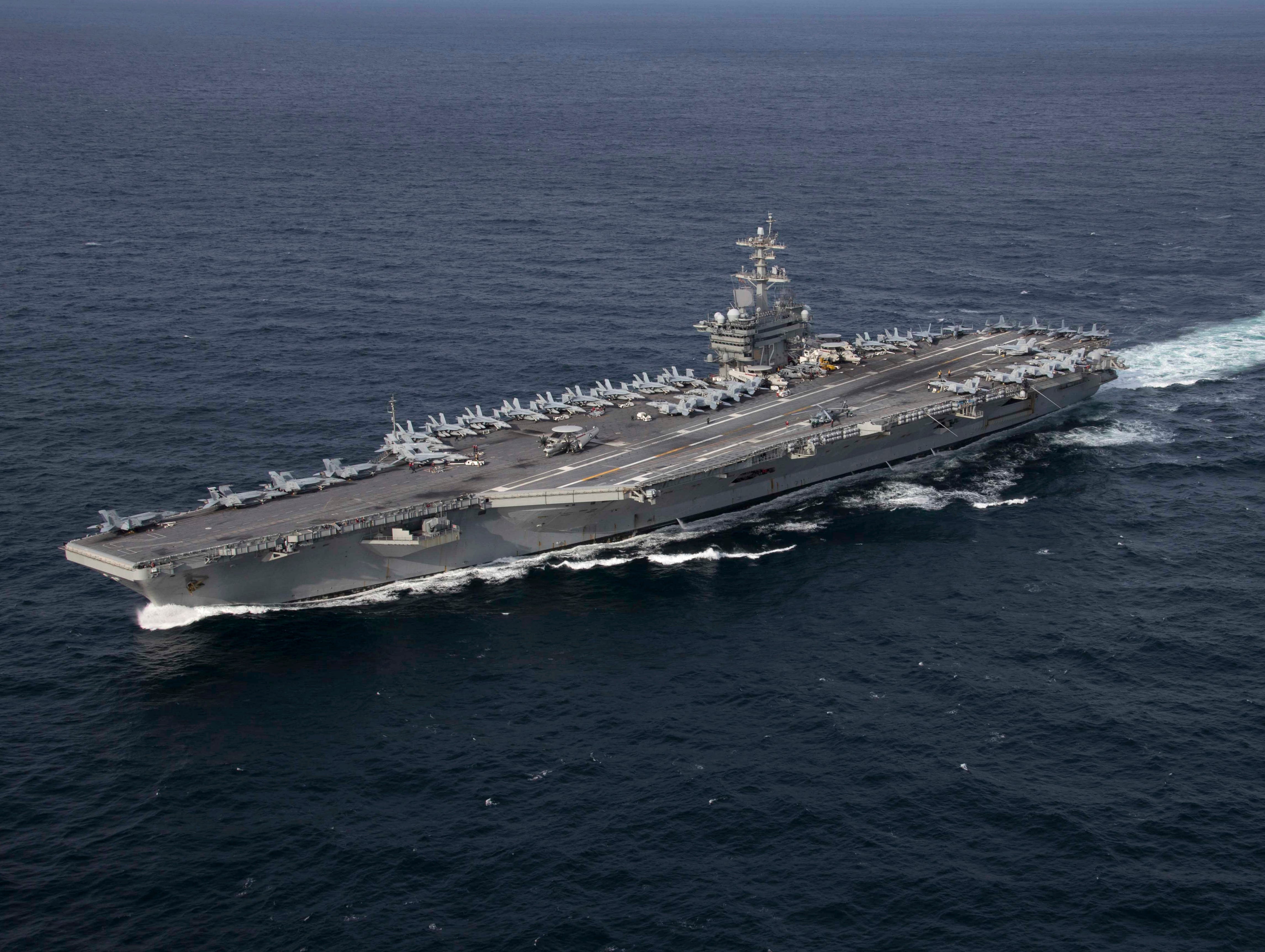
The USS Abraham Lincoln has spent months fighting a war with no clear end, while sailors face exhaustion, shortages and families begging for answers.
By Dr. John Petrone
I wore the uniform of the United States Air Force.
My father served in the Army. My brother served two combat tours in Vietnam. My family has sent men into uniform across generations, including relatives who served during World War II, and one who is still MIA in Korea.
So spare me the flag-waving speeches.
Spare me the carefully scripted praise about the “grit,” “professionalism,” and “resilience” of our troops when the people entrusted with their welfare apparently cannot reliably get them soap, decent food, working toilets, clean living spaces, mail from home — or even tell their families when they are coming back.
Because that is what military families connected to the USS Abraham Lincoln are describing.
According to MS NOW, approximately 5,000 sailors and Marines aboard the carrier are enduring an extraordinarily prolonged deployment connected to the war with Iran. As of August 7, the Lincoln had been deployed for 259 days, including an astonishing 208 consecutive days at sea before briefly stopping in Oman. Families have raised concerns about exhaustion, mental health, food and supply shortages, water contamination, plumbing problems and months of disrupted mail.
And somehow, we are supposed to call this supporting the troops.
I call it something else.
A failure of leadership.
THIS IS WHAT “SUPPORT THE TROOPS” ACTUALLY MEANS
Americans have cheapened that phrase almost beyond recognition.
“Support the troops” gets slapped on bumper stickers.
Politicians say it at rallies.
Defense secretaries say it behind podiums.
Presidents say it while posing with uniforms and saluting flags.
But supporting troops is not a marketing slogan.
It means taking care of them when nobody is watching.
It means feeding them.
It means giving them sanitary living conditions.
It means keeping equipment and facilities functional.
It means ensuring sailors operating one of the most dangerous workplaces on Earth are not so physically and psychologically exhausted that fatigue itself becomes another enemy.
It means making sure families know their government sees them as something more than collateral damage in an open-ended military operation.
And above all, it means remembering something civilians who romanticize war often forget:
Service members are human beings before they are military assets.
They have children.
Spouses.
Parents.
Funerals to attend.
Babies to hold.
Lives waiting for them at home.
One spouse told Navy officials that her husband had yet to spend time with the baby born during his deployment. Other families said sailors had not yet met their own newborn children. Families described missed funerals and other irreplaceable moments while still lacking a firm date for when their loved ones would return.
Those moments never come back.
No medal restores them.
No admiral’s speech restores them.
No politician’s patriotic photo opportunity restores them.
259 DAYS
Think about that number.
Two hundred fifty-nine days deployed.
And 208 continuous days at sea before that July port visit.
MS NOW reports that families packed a meeting at Naval Air Station North Island demanding answers from Acting Navy Secretary Hung Cao. Some spouses were reportedly in tears.
One parent said her daughter believed she might never come home and feared she would die aboard the ship.
That should stop every American cold.
Not because service is supposed to be easy.
It isn’t.
Nobody who has worn a uniform believes it is.
Deployment means hardship. Combat means danger. Operational security means commanders sometimes cannot tell families everything they desperately want to know. Contested logistics in wartime are real, and Navy leaders told families that operations around Bahrain severely disrupted the normal flow of food, mail and supplies.
But those realities cannot become an all-purpose excuse for failure.
When the people carrying out the mission are reaching the limits of endurance, leadership does not get to respond by simply praising their endurance.
That is precisely when leadership is supposed to act.
STOP PRAISING “RESILIENCE” WHEN WHAT YOU MEAN IS “ENDURE MORE”
This word has become one of the most abused terms in institutional America:
Resilience.
The military loves it.
Corporations love it.
Politicians love it.
Why?
Because sometimes “be resilient” becomes a convenient substitute for:
We failed to provide what you needed, so please endure the consequences quietly.
Navy leaders repeatedly praised the Lincoln’s crew for its professionalism and toughness.
And I have no doubt those sailors deserve every ounce of that praise.
But there comes a point where constantly applauding people for enduring terrible conditions becomes obscene if the institution doing the applauding is not fixing those conditions.
You don’t honor sailors by discovering how much deprivation they can tolerate.
You honor them by ensuring deprivation does not become normalized.
MOLD OR MILDEW? THAT IS YOUR DEFENSE?
This may be the most infuriating detail of all.
Families raised concerns about what sailors believed was mold in showers.
Navy officials reportedly responded that some of it might actually be mildew caused by difficult ventilation conditions.
Seriously?
Mildew.
Apparently somebody thought the distinction would make the story sound better.
Officials also acknowledged a persistent plumbing clog that left multiple toilets unusable for an extended period and conceded that supplies and mail became “extremely bad” before improving. They said industrial hygienists were checking bathroom conditions and that reports from the ship indicated working air conditioning, clean water and meal options.
Those explanations deserve to be heard.
But they do not erase the larger problem.
Because when families of deployed sailors are publicly confronting the Secretary of the Navy about food, hygiene, exhaustion and mental health, arguing about whether the black stuff in the shower technically qualifies as mold or mildew misses the damned point.
The point is that military families have lost confidence that the institution is adequately caring for their people.
That is a leadership crisis.
THE MOST DANGEROUS WEAPON ON THAT SHIP MAY BE EXHAUSTION
Aircraft carriers are floating cities built around extraordinarily dangerous machinery.
Jet aircraft.
Aviation fuel.
Weapons.
Catapults.
Arresting gear.
Rotating equipment.
High voltage.
Nuclear propulsion.
Thousands of people working long hours in confined spaces where mistakes can become catastrophic in seconds.
Now add prolonged combat operations and chronic exhaustion.
Anyone who has served understands what happens when fatigue accumulates.
Judgment deteriorates.
Attention wanders.
Reaction time slows.
Mistakes multiply.
Military families are worried about precisely that.
And their concern is not irrational. Broader professional military commentary has also warned that exhausted sailors and strained Navy systems can create serious readiness and safety problems.
Readiness is not simply whether the ship can launch aircraft tomorrow morning.
Readiness includes the human beings operating the ship.
Break the people and eventually you break the force.
THE COMMANDER IN CHIEF DOES NOT GET TO WASH HIS HANDS OF THIS
Here is where accountability becomes uncomfortable.
Wars do not happen in some abstract Pentagon vacuum.
Presidents make decisions.
Administrations establish objectives.
Political leaders determine whether military operations expand, continue or end.
And then young Americans pay the price of those decisions.
The Abraham Lincoln is conducting operations connected to the ongoing war with Iran, and its sailors and Marines are carrying out orders their civilian leadership has given them. Independent reporting has likewise described military-family anger over the prolonged deployment and deteriorating living conditions.
Therefore civilian leadership owns responsibility for asking the most basic questions imaginable:
What is the objective?
What constitutes success?
How long will this continue?
What are we asking of our forces?
Can we sustain it?
What are we doing to protect the people carrying it out?
You don’t get to order Americans into harm’s way indefinitely and then outsource responsibility for their welfare down the chain of command.
That is not leadership.
That is cowardice dressed in a suit.
MY ANGER IS NOT DIRECTED AT THE NAVY — IT IS DIRECTED AT FAILURE
I want to be very clear about something.
This is not an attack on the United States Navy.
It is precisely the opposite.
I respect those sailors too much to remain silent.
I respect the chiefs trying to hold units together.
I respect the officers trying to accomplish missions under circumstances they did not create.
I respect the families holding households together thousands of miles away while wondering whether their son, daughter, husband, wife, father or mother is safe.
And I respect the sailors who climb out of their racks every day, put on the uniform and go back to work.
My contempt is reserved for leaders who confuse the willingness of American service members to endure hardship with permission to demand limitless hardship from them.
Those are not the same thing.
MILITARY FAMILIES HAVE ALREADY SACRIFICED ENOUGH
There is another group America routinely forgets.
Military families.
They never signed an enlistment contract.
Yet they deploy too.
They endure empty chairs at dinner tables.
They raise children alone.
They wait for phone calls.
They watch news reports and wonder whether the place being bombed is where their loved one happens to be.
They learn to live with uncertainty.
And right now some Lincoln families reportedly cannot even plan their next move because after the deployment the carrier is scheduled to shift home port from San Diego to Bremerton, Washington. They are waiting for the ship to return while simultaneously trying to figure out when to move their families hundreds of miles north.
That isn’t an abstraction.
That’s somebody’s marriage.
Somebody’s mortgage.
Somebody’s child changing schools.
Somebody’s life.
Military families are part of American military power whether Washington remembers it or not.
Treat them accordingly.
HOW WE FIGHT BACK
1. Congress must demand answers.
The House and Senate Armed Services Committees should conduct aggressive oversight into deployment lengths, manning, food, sanitation, supply chains, maintenance, mental-health resources and operational fatigue aboard the Lincoln and across the fleet.
2. Protect sailors and families who speak up.
No sailor should fear retaliation because a spouse or parent tells the truth about conditions aboard a ship. Congress and Navy leadership should make that protection unmistakable.
3. Publish meaningful readiness information.
Operational security must be protected, but it cannot become a blanket excuse for withholding basic information about deployment extensions, crew welfare and force sustainability.
4. Treat mental health as combat readiness.
Chaplains and resilience counselors matter. So do sleep, sanitation, food, time ashore, adequate staffing and reasonable operational tempo. You cannot counsel your way out of institutional exhaustion.
5. Demand a coherent strategy for every military commitment.
Before asking another generation to endure prolonged combat operations, civilian leaders owe the country an answer to the question Washington too often avoids:
What exactly are we trying to accomplish, and what ends this war?
6. Stop confusing patriotism with silence.
The most patriotic thing Americans can do for military personnel is demand that those who send them into danger remain accountable for what happens afterward.
A FINAL WORD FROM A VETERAN
I learned a long time ago that loving your country does not require worshiping its leaders.
Quite the opposite.
Patriotism demands accountability.
When Americans volunteer to defend this nation, there is an implicit covenant between them and the country they serve.
They promise to go.
They promise to fight.
They promise, if necessary, to die.
And the nation promises something in return:
We will not treat your sacrifice casually.
We will prepare you.
We will equip you.
We will feed you.
We will care for you.
We will care for your families.
And we will never forget that beneath the uniform is an American citizen whose life belongs to something larger than the ambitions of politicians.
The sailors and Marines aboard the USS Abraham Lincoln have kept their part of that covenant.
The question now is whether the people commanding them — from the Pentagon all the way to the White House — are keeping theirs.
Because “support the troops” means absolutely nothing if we only say it while asking them to suffer in silence.
Honor the uniform.
Protect the people wearing it.
Demand accountability from those who send them into war.
Our service members have done their duty.
Now Washington damn well better do its own.


So Sorry. So Wrong.