

By Dr. John Petrone
This Substack is reader-supported. To receive new posts and support my work, consider becoming a free or paid subscriber.
The 2026 midterm election has begun.
Not figuratively.
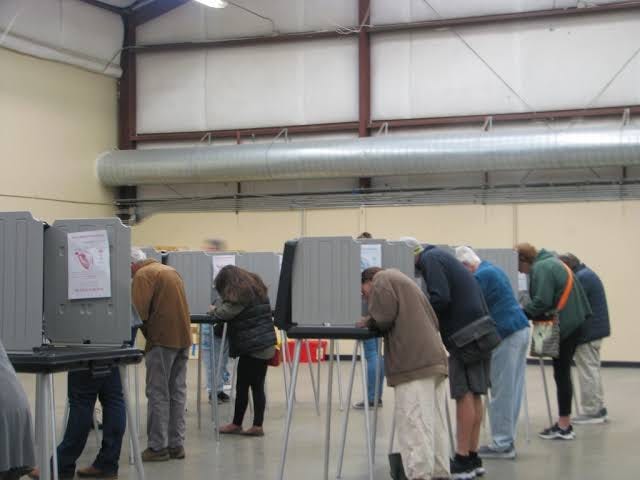
Americans are already voting.
Virginia opened in-person early voting today. Voters in Minnesota, Idaho, South Dakota and other states also have early or in-person absentee options underway, with more states following in the weeks ahead. Election Day is November 3.
Normally, that alone would be reason enough for me to encourage people to vote early if their state allows it.
This year, there is another reason.
The rules governing who can vote, how people register, how ballots can be returned, and how elections are administered are changing in states across the country.
That is not political rhetoric. It is happening.
The Brennan Center for Justice reports that through May 1, 2026, nine states had enacted 12 laws it classifies as restrictive to voting access, with nine of those laws expected to be in effect for the November midterms. Dozens of other proposals were considered around the country.
Some of those changes involve identification.
Some involve documentary proof of citizenship.
Some involve voter-registration procedures.
Some involve challenges to voter eligibility.
And some involve mail voting.
Supporters of these measures generally argue that stronger verification requirements protect election integrity. Voting-rights organizations and opponents argue that additional requirements can create unnecessary barriers for eligible citizens.
Whatever side of that debate you occupy, one fact should be obvious:
Voters need to know the rules before they show up to vote.
The Rules Are Not the Same Everywhere
Consider South Dakota.
A law that took effect in March now requires people registering to vote to provide documentation demonstrating U.S. citizenship, with acceptable documents including certain driver’s licenses, tribal identification, birth certificates, passports and naturalization documents.
Utah has enacted its own documentary-proof system. Beginning with elections held on or after November 1, voters who do not provide documentary proof of citizenship can be limited to voting in federal races rather than state and local contests.
Those are substantial changes.
And they illustrate why relying on what you remember from the last election may not be enough.
Check your registration now.
Check your identification requirements.
Check your polling location.
Check whether your congressional district has changed.
Check when early voting begins.
And if something is wrong, find out now — not while standing at a polling place on November 3.
Mail Voting Has Been in the Courts
The fight over voting rules has also reached the federal government and the Supreme Court.
This week, the Supreme Court declined to allow a new Postal Service rule governing mail ballots to take effect for the midterm election. The proposed system would have imposed new requirements involving ballot-envelope designs, barcodes and voter information supplied by states. Lower federal courts had blocked implementation, and the Supreme Court left that protection in place for this election.
The broader legal fight over federal involvement in election administration is continuing.
That should tell voters something important regardless of party:
Do not assume the voting process is exactly the same as it was two years ago.
Learn the rules that actually apply where you live.
If You Can Vote Early, Why Leave It to One Day?
There is another reason I believe early voting makes sense when it is available to you.
Life happens.
Your car does not care that November 3 is Election Day.
Neither does the flu.
Neither does your employer.
Neither does a family emergency, a snowstorm, a sick child, a delayed flight or an unexpected appointment.
You can fully intend to vote on Election Day and still discover that circumstances have other plans.
Early voting gives you something valuable:
Time.
Time to discover a registration problem.
Time to determine whether you have the identification your state requires.
Time to find the correct polling location.
Time to resolve a problem instead of discovering it when the clock is running out.
Early voting is not Democratic.
It is not Republican.
It is not liberal or conservative.
It is simply another lawful way for an eligible American citizen to cast a ballot.
If You Vote By Mail, Don’t Procrastinate
The United States Postal Service is giving voters straightforward advice for 2026:
Plan early.
Know your jurisdiction’s deadlines.
And if you return your ballot through the mail, USPS recommends sending it at least one week before the deadline by which the election office must receive it.
Take that seriously.
A ballot sitting on your kitchen counter does not count.
A completed ballot sitting in your car does not count.
A ballot mailed too late to satisfy your state’s deadline may not count.
A vote only matters when it is successfully cast and counted according to the law where you live.
This Is Bigger Than One Election
We spend enormous amounts of time talking about democracy as though it were an abstract concept.
It isn’t.
Democracy ultimately comes down to something remarkably ordinary.
A citizen.
A ballot.
A choice.
And a system that records that choice.
You may be a Democrat.
You may be a Republican.
You may be an independent.
You may love the current administration or oppose nearly everything it does.
You may believe election laws need to be stricter.
You may believe some of those laws make voting unnecessarily difficult.
None of that changes your responsibility to understand the rules and participate if you are eligible.
People have every right to argue about election policy.
Legislatures have the authority to enact laws within constitutional limits.
Courts have the authority to review those laws.
Citizens have the right to challenge them.
But while those arguments continue, elections do not stop.
The calendar keeps moving toward November 3.
Don’t Give Away Your Voice Through Procrastination
There is something that troubles me whenever I hear someone say:
“I’ll vote if I have time.”
No.
Make the time.
We routinely schedule medical appointments weeks in advance.
We plan vacations months ahead.
We buy tickets to ballgames and concerts.
We put meetings on calendars.
Surely choosing the people who will exercise governmental power in our name deserves at least the same degree of planning.
And in an election year when voting rules are changing and being litigated, planning matters even more.
So check your registration.
Know your state’s requirements.
Know what identification you need.
Know where you vote.
Know your mail-ballot deadlines if you use one.
And if early voting is available and works for you, consider taking advantage of it.
Because Election Day should not be the first day you start thinking seriously about how you are going to vote.
Your Ballot Is Yours
No politician owns your vote.
No political party owns your vote.
No television network, newspaper, social-media personality or Substack writer owns your vote.
You do.
Use it according to your own conscience.
Study the candidates.
Study the issues.
Make your own judgment.
And then cast your ballot while you still have plenty of time to deal with anything that might stand between you and the voting booth.
The arguments over American elections will continue.
The lawsuits will continue.
The political fighting will continue.
But there is one thing every eligible American can control:
Whether we make a plan to participate.
Voting has already begun.
Check the rules where you live.
And if you can vote early, don’t leave something this important until the last possible day.
Your vote is your voice. Make sure it gets heard.
Did mine this morning. Fast, easy, no problems. (Virginia)