
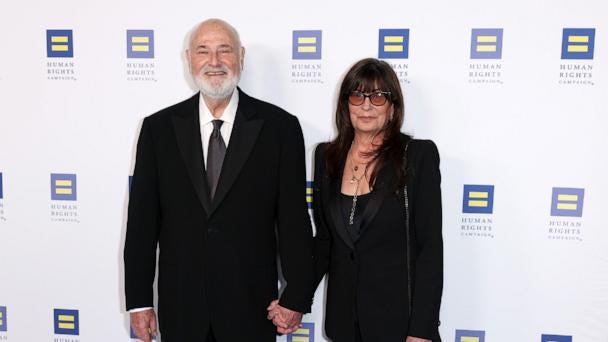
When a Tragedy Became a Punchline
Rob and Michele Reiner Dedicated Their Lives to Civic Engagement. What Trump Did With Their Death Tells Us Who He Has Become.
By Dr. John Petrone
Rob Reiner and Michele Singer Reiner were found dead in their Brentwood home Sunday afternoon. The Los Angeles Police Department is investigating their deaths as a homicide, and their 32-year-old son Nick has been arrested in connection with the case.
This is a devastating loss for their family, friends, and the broader community. It is a moment that should demand solemnity, empathy, and collective reflection — especially from the nation’s leaders.
Instead, the President of the United States turned it into a political performance.
This Was a Family and Civic Tragedy
Rob Reiner was not merely an entertainer. He was a public figure whose work and voice shaped American culture and civic life for generations. With Emmy awards as an actor and an enduring legacy as a director of films like The Princess Bride, When Harry Met Sally and A Few Good Men, he also used his platform for public advocacy. His work included co-founding civil rights organizations, fighting for marriage equality, defending voting rights and speaking openly about the importance of democratic norms.
Michele Singer Reiner was his partner in life and in many of the causes they supported together. She was a photographer and life partner in an enduring marriage that lasted decades and produced three children.
They were parents. They were citizens engaged in the civic life of this country. Their deaths are a personal and public loss.
How the President Responded Was a Moral Collapse
Within hours of this unimaginable tragedy, the President posted about their deaths on Truth Social in language that shifted the focus from mourning to mockery. He described Reiner’s supposed “Trump Derangement Syndrome” as if it were the cause of the killings and framed the tragedy as evidence for his own worldview, rather than offering condolence or respect to a grieving family.
This was not a slip. It was a choice.
While national sorrow was pouring in, including from figures across the political spectrum, the President’s message treated loss as an opportunity to deride a critic. His tone made the moment about himself and about political grievance rather than about empathy, dignity, and respect.
Why This Matters More Than You Think
America’s leaders communicate far more than policy. They signal norms and boundaries. They define what is humanly permissible and what is beyond the pale.
When a president treats the death of a civic-minded family — one that devoted so much of its public life to the betterment of others — as content for political humor, it erodes something more important than decorum:
It erodes the basic civic respect that must bind a democracy together.
Presidents are not pop stars or pundits. They are entrusted with representing the entirety of the nation, especially in moments of collective grief. When that trust is violated, it changes how people relate to power, to each other, and to the very idea of shared civic life.
Rob Reiner Believed in Engagement
Reiner did not retreat from political speech because it was unpopular. He embraced it because he believed democracy required participation. He spoke out about threats to institutions because he believed citizens could shape them for the better.
His final months were marked by reflections on free speech, on the responsibilities of public life, and on the urgent need to protect civic norms. In interviews he spoke about the role of media and the safeguarding of democratic space — not as abstract debates, but as lived civic duties.
That is the legacy of a life lived in public service, not self-absorption.
This Moment Reveals Something About Power
There is a difference between disagreement and dehumanization. There is a difference between criticizing policies and attacking people. There is a difference between mourning and mocking.
What we witnessed was not irreverence. It was a signal.
It was a signal that in this moment, cruelty is easier than compassion, political advantage feels more urgent than human loss, and branding remains more compelling than empathy.
This is not who we should be. It is who we have been allowed to become in some corners of public life. And it should alarm every citizen who still believes in democratic dignity.
What We Must Do
Honor the Reiners by doing what they believed in:
Take civic participation seriously.
Speak out when power abuses language and narrative.
Demand that leaders show restraint, empathy, and respect in moments of national sorrow.
Recognize that how we treat loss says more about our society than any policy victory.
True civic engagement carries a cost. Rob and Michele Reiner paid the highest one. Their commitment to using culture and voice to engage multiple generations is worth honoring through our own commitment to what is decent, just, and humane.

