You Cannot Gaslight a Grocery Bill
When a failing White House starts calling inflation fake, it is admitting the public has stopped buying the lie
By Dr. John Petrone
This is what economic failure sounds like when it runs out of excuses. Prices go up. Approval goes down. Families feel it every time they fill a tank, swipe a card at the grocery store, or open a utility bill. And instead of fixing the problem, Trump and his people have settled on a new strategy: tell Americans not to believe their own lives.
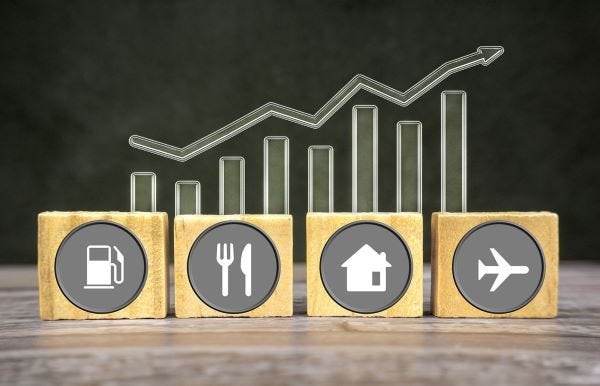
The numbers are ugly, and they explain the panic. A CNN poll conducted by SSRS found that just 31 percent of Americans approve of Trump’s handling of the economy, only 27 percent approve of his handling of inflation, and roughly two thirds say his policies have made the economy worse. Quinnipiac found Trump’s overall job approval at 38 percent and reported that 65 percent of voters blame him at least somewhat for the recent rise in gas prices. Meanwhile, the Bureau of Labor Statistics reported that consumer prices rose 0.9 percent in March and 3.3 percent over the year, with gasoline up 21.2 percent in a single month, the largest monthly jump in that series since it began in 1967. AAA listed the national average for regular gas at $4.076 on April 17.
The Lie
Treasury Secretary Scott Bessent looked at that public anger and decided the problem was not the economy. The problem, apparently, was that Americans were telling the truth about it. He said people feel good “in their heart of hearts,” suggesting the public mood is somehow false even when families say otherwise in poll after poll. Trump followed with the same insult in a different costume. He brushed off gas prices as “not very high” and then went to Las Vegas and waved away war driven price pressure as “fake inflation.”
That is not leadership. That is gaslighting with a flag pin on it.
They are not arguing that life is affordable. They are arguing that your frustration is imaginary. They are not showing evidence that prices are under control. They are demanding that you distrust your own receipt, your own budget, your own eyes. This White House has moved from spin to something more desperate. It is now trying to govern by hallucination.
The Pattern
And this is not some isolated verbal stumble. Reuters reported last week that Americans are souring on the economy to a degree not seen before in this period, with inflation pressures and affordability worries creating serious political risk for Trump. Reuters also reported this week that the administration is trying to sell upbeat economic messaging in Las Vegas while many voters feel those gains are being eaten alive by higher fuel costs. The Washington Post reported that Trump’s economic pitch in Las Vegas met a skeptical audience, a sign that the public is not buying the script even in a state central to his political strategy.
That is the broader story here. Multiple outlets are seeing the same pattern. Public frustration is real. The cost squeeze is real. The administration knows it has an affordability problem. But instead of confronting it honestly, it is trying to perform a psychological trick on the country.
What They Are Really Saying
What Bessent and Trump are really saying is simple.
Do not trust your empty wallet.
Do not trust your gas pump.
Do not trust your grocery bill.
Trust us instead.
That is the message.
It is the message of insulated people who think reality is whatever comes out of their mouths on a podium. It is the message of a president who has spent his life wrapped in wealth and now expects working Americans to nod along while he tells them that four dollar gas is not a problem and inflation is not really inflation. It is the message of an administration so detached from ordinary life that it thinks denial can substitute for relief.
Why It Matters
When a government starts calling obvious pain fake, it is doing more than lying. It is trying to break the connection between citizens and reality. That is always dangerous.
A democracy cannot function when leaders insist that facts are feelings, prices are illusions, and public anger is just bad polling. People do not become cynical because they misunderstand their lives. They become cynical because powerful people keep telling them their lives are not happening.
This is why the economic message has taken such a bizarre turn. They know they are losing the argument on the merits. They know people do not feel prosperous. They know affordability remains a wound. So they have reached for the oldest con in politics: deny the pain, mock the evidence, and hope repetition can bury lived experience.
It will not.
A mother paying more at the pump does not need Scott Bessent to interpret her heart.
A retiree stretching a fixed income does not need Donald Trump to tell him inflation is fake.
A worker trying to survive on wages that do not keep pace with costs does not need another stage managed fantasy in Las Vegas.
How We Fight Back
We fight back by refusing to let them rename reality.
We say plainly that prices matter.
We say plainly that affordability matters.
We say plainly that lying about the economy while families struggle is not strength. It is contempt.
We press every Republican who repeats this garbage. At town halls. In letters to the editor. On local radio. In public meetings. On every platform available. Make them defend the insult. Make them explain to their constituents why the pain they feel is supposedly not real.
And we keep reminding this country of a basic truth that should never have to be said: if your administration has to tell people they secretly feel better than they say they do, your administration has already failed.
The White House can call it fake inflation.
The public will call it what it is.
A lie.
A dodge.
A confession.


